AI systems · product engineering
CareerOS
A safety-gated AI application platform where model workers can propose, but deterministic software owns workflow state, authorization and auditability.
Problem
Most AI job-application demos stop at generating text. The harder engineering problem is everything around that generation: candidate configuration, evidence traceability, workflow state, independent review, persistence, policy checks and an audit trail that cannot be silently bypassed.
What I built
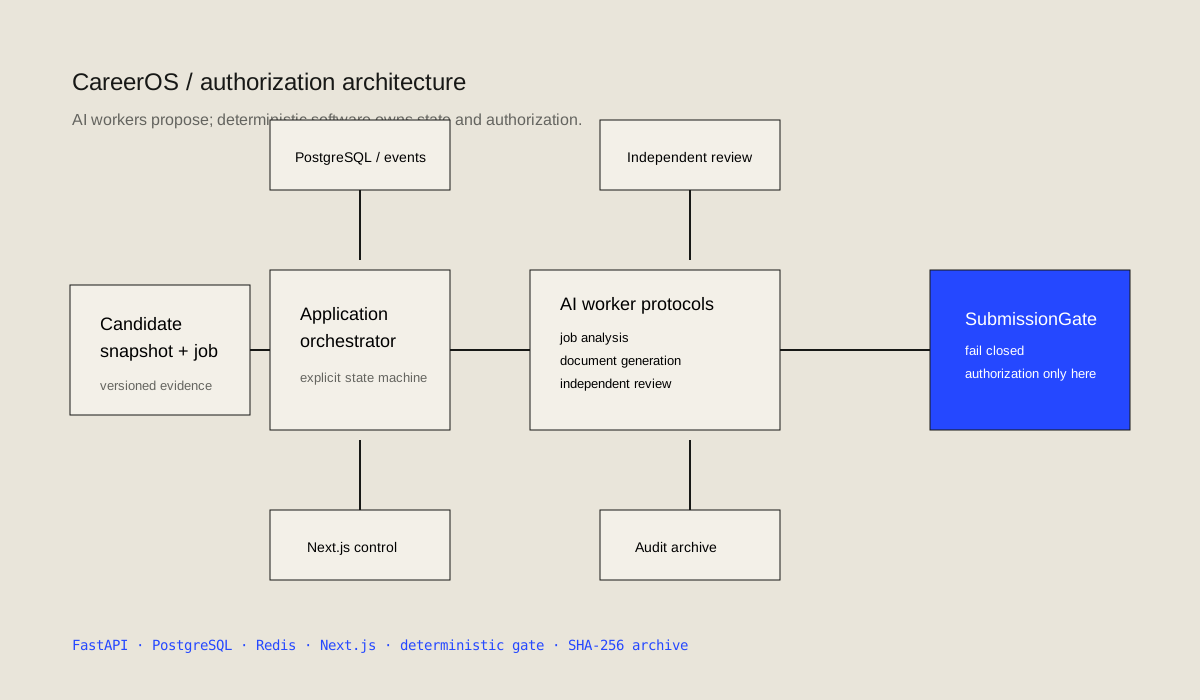
CareerOS separates AI proposals from authorization. Candidate data is schema-validated and versioned; applications move through an explicit state machine; three isolated worker protocols handle analysis, document generation and review; and only a deterministic SubmissionGate can issue an authorization. A FastAPI/PostgreSQL backend and a typed Next.js control plane expose the system.
Submission authorization is issued only by a deterministic gate.
Engineering decisions
Where the project becomes more than a demo.
The details that matter are usually in the constraints: who is allowed to decide, what gets measured, what is kept separate, and how failure is represented.
AI proposes. Software decides.
The orchestrator can sequence model workers but cannot authorize submission. Missing, unknown or failed prerequisites deny by default.
Candidate facts live outside the engine.
Profiles are strict configuration, versioned into deterministic snapshots with source hashes so later decisions can be traced to the exact evidence used.
Workflow state is explicit.
Enum-backed allow-listed transitions and idempotency keys make application state inspectable instead of hiding it inside conversational memory.
Auditability is a product requirement.
Application archives use canonical snapshots plus SHA-256 manifests so additions, deletions and modifications can be detected.
Evidence
What the repository actually supports.
Next.js control plane, FastAPI API, PostgreSQL, Redis coordination boundary
job analysis, document generation, independent review
the deterministic SubmissionGate
Limits
What I am not claiming.
- The current milestone intentionally excludes live browser submission and CAPTCHA / anti-bot workarounds.
- Only fictional candidate data is committed.
- The current model workers are protocol boundaries with deterministic fakes; live model adapters are a later integration point.
Signal